
A sewage backup in house plumbing is a Category 3 'black water' emergency, and the first move is to stop using water everywhere in the home.
Every flush, faucet, and running appliance pushes more raw sewage into pipes that are already backing up.
This is the rare problem where doing nothing is safer than doing the wrong thing, because the water itself can make your family sick.
Below is the ordered plan: the emergency steps, the real health hazards, why this is not a DIY job, how cleanup works, and the insurance traps owners keep hitting.
The first steps when sewage backs up in your house
The moment sewage appears, stop all water use: no flushing toilets, no sinks, no dishwasher, no washing machine.
More water in the system means more sewage on your floor. The backup has nowhere to go but up through the lowest drains.
Next, look before you step. If the water is near outlets, cords, or the breaker panel, do not walk into it.
Shut off power to that area at the breaker only if you can reach it without standing in water. If you cannot, call an electrician or your utility.
Keep children and pets out of the room entirely, and close the door if you can. This is the same first-hour discipline as any flooded basement emergency.
Open a window for airflow, but do not run the central HVAC, which can pull contaminated air through the whole house.
Raw sewage in the home is a biohazard and a race against the clock. Do not wait it out.
(844) 502-1354Why a sewage backup in house drains is a health hazard
Raw sewage is Category 3 black water, the most contaminated class of water the restoration industry recognizes.
It carries bacteria, viruses, and parasites from human waste, including E. coli, Salmonella, and Hepatitis A.
Exposure can trigger vomiting, diarrhea, fever, and infections, and the risk is highest for young children, older adults, and anyone with a weak immune system.
You do not have to touch the water to be exposed. Contaminated aerosols and dried sewage dust can carry pathogens through the air.
That is why a sewage backup is treated as a biohazard, not a mess to wipe up with a towel.
Is a sewage backup in the house safe to clean yourself?
For anything beyond a tiny, fresh spill on a hard floor, the honest answer is no.
A regular hardware-store dust mask does not filter sewage pathogens, and household gloves and bleach are not enough for black water.
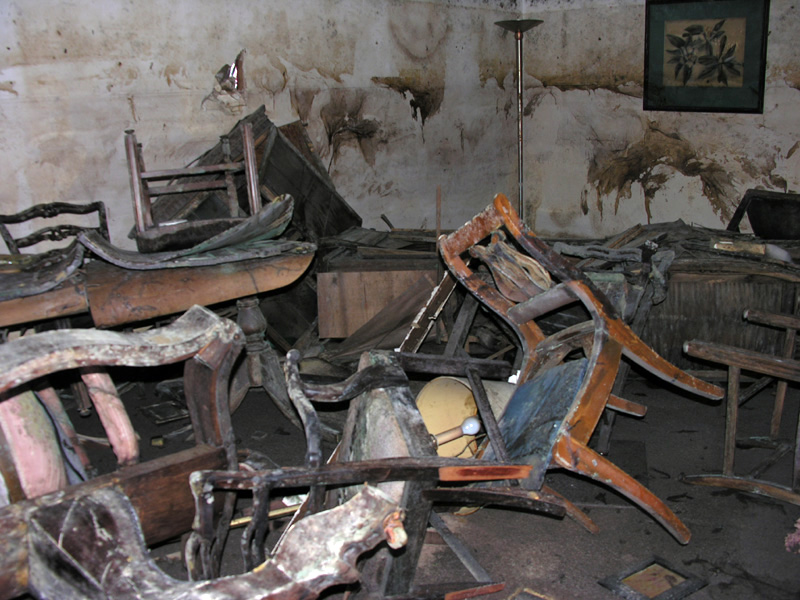
Sewage wicks upward into drywall and soaks down into subfloor and carpet padding, spreading contamination far past the water you can see.
Porous materials that soak up black water usually cannot be saved. Carpet, padding, drywall, insulation, and upholstered furniture typically come out and get thrown away.
Even after the surface looks dry, trapped moisture and bacteria can grow dangerous mold inside walls and under floors.
Professional crews wear full protective suits, respirators, and eye protection for a reason. Trying to save money here is how people end up sick.
What to do while you wait for the crew
A good restoration company can be on site fast, but the first 30 minutes are yours to use well.
Photograph and video everything before you move it. Capture the water line, the source, and every damaged item, because adjusters pay on documented loss.
If it is safe and the water is shallow, lift rugs, boxes, and valuables up off the floor and out of the room to limit what the sewage ruins.
Do not use that bathroom, that floor drain, or any fixture on the affected line until the blockage is cleared.
Wet items that already soaked, like carpet and padding, are often a loss. Read up on whether wet carpet can be saved before you fight to keep it.
Keep every receipt for hotels, fans, or supplies. Many policies reimburse these once a covered claim is open.
Black water: how dirty is a sewage backup?
The restoration standard, IICRC S500, sorts water into three categories of contamination.
- Category 1, clean water from a supply line or rain. Safe to handle with basic protection.
- Category 2, gray water from a washer, dishwasher, or sink. Some contamination and health risk.
- Category 3, black water from sewage, toilets, or outside flooding. A serious health hazard.
Sewage is always Category 3, and so is any clean water that later touches it.
There is a clock, too. Even cleaner water that sits for a day or two degrades toward black water as bacteria multiply.
Miss that window and you are fighting mold on top of sewage, and the job gets larger and more expensive fast.
What causes a sewage backup in house plumbing?
Most backups start in the main sewer line, the pipe that carries waste from your house to the city sewer or septic tank.
The usual culprits:
- Tree roots growing into pipe cracks and joints, the most common cause of a blocked lateral.
- Grease, wipes, and 'flushable' products that never break down and pack the line solid.
- Aging or collapsed pipes that sag, crack, or crush over decades.
- Heavy rain overwhelming a combined storm-and-sewer system, forcing waste back toward homes.
- A blockage in the city main, which is the utility's problem, not yours.
One clue points to the main line: if several drains back up at once, or the lowest toilet and tub gurgle when you run the washer, the blockage is likely outside your home.
Aging infrastructure makes this more common every year. The Insurance Information Institute reports backed-up sewers have been rising about 3 percent annually, with much of the country's sewer pipe over 30 years old.
Septic system backup vs city sewer backup
Where you sit on the grid changes the fix, but not the health risk. Sewage is Category 3 black water either way.
On a city sewer, a backup usually means your lateral or the municipal main is blocked. A blockage in the public main is the utility's responsibility to clear.
On a septic system, the tank may be full, the drain field saturated, or the line to the tank clogged. Slow drains and a soggy, smelly yard over the tank are the warning signs.
Either way, the inside cleanup is the same biohazard. The difference is who you call to fix the cause: the city, a plumber, or a septic pumper.
How professionals clean up a sewage backup
Certified crews follow a set protocol under IICRC S500, and it is far more than pumping and mopping.
- Extract the standing sewage with industrial pumps and vacuums.
- Remove and bag the porous materials sewage soaked, then dispose of them by local rules.
- Clean and disinfect every hard surface with EPA-registered antimicrobial products.
- Dry the structure with air movers and dehumidifiers to a measured moisture target.
- Verify with moisture readings before rebuilding, so nothing damp gets sealed inside a wall.
Good crews dry inside the wall cavities, not just the surface, because hidden moisture is what grows mold weeks later.
Choosing the crew matters. Here is how to vet a restoration company so you are not overcharged or left with damp studs.
What sewage backup cleanup costs
Professional sewage cleanup runs about $7 to $15 per square foot, with most jobs landing between $2,000 and $10,000, per HomeGuide's 2026 cost data.
Fresh sewage cleaned right away costs the least. Contamination that sat for days, or that spread mold, costs far more.
The source drives price, too. A clogged or collapsed main line means digging and pipe repair on top of the interior cleanup.
Before you approve any estimate, ask for the scope in writing: what gets removed, what gets dried, and what gets rebuilt, so the number is not a second shock.
Does homeowners insurance cover a sewage backup?
Usually not by default. A standard homeowners policy excludes sewer and drain backup unless you added the coverage.
The fix is a water or sewer backup endorsement, a rider you buy separately, often for roughly $50 to $250 a year.
It typically provides $5,000 to $25,000 of coverage, while the average backup claim runs $10,000 to $20,000, so many owners find themselves underinsured.
People often learn at claim time that they quietly declined this rider, or that the limit they chose is too low for a finished basement.
Flood insurance is separate again, and sewage pushed in by heavy rain can fall in a gray zone between policies. Knowing what your policy actually covers before a loss is worth the hour.
If a legitimate claim comes back denied, you can fight it with your photos, documentation, and, if needed, a public adjuster.
How to prevent the next sewage backup
Once the crew leaves, a few steps lower the odds of a repeat backup.
- Install a backwater valve on the main drain, the single most effective fix.
- Never flush wipes, grease, or paper towels, no matter what the package claims.
- Snake or hydro-jet the main line if tree roots keep returning.
- Disconnect illegal connections, like downspouts or sump pumps tied into the sanitary sewer.
A backwater valve is the big one. It lets waste flow out but slams shut when the city sewer tries to push back in during a storm.
And keep the backup endorsement on your policy. It is cheap insurance against one of the most expensive water losses a home can suffer.
If black water is in your home, a professional crew can remove it safely, dry the structure, and document the loss for your claim before mold sets in.
(844) 502-1354Common questions
Is a sewage backup dangerous to my health?
Yes. Raw sewage is Category 3 black water full of bacteria, viruses, and parasites, including E. coli, Salmonella, and Hepatitis A. The CDC notes sewage can carry more than 120 different viruses. Exposure can cause vomiting, diarrhea, fever, and infections, with the highest risk for young children, older adults, and people with weak immune systems.
Can I clean up a sewage backup myself?
Only a tiny, fresh spill on a hard floor. Anything larger is a professional job. Sewage wicks into drywall and soaks subfloor and carpet padding, a hardware-store mask will not filter the pathogens, and porous materials it touches usually have to be removed and thrown away. DIY cleanup risks illness and leaves hidden contamination that grows mold.
Why is sewage backing up into my house?
Most backups start in the main sewer line from tree roots, grease and flushable wipes, aging or collapsed pipe, heavy rain overwhelming a combined sewer, or a blockage in the city main. If several drains back up at once, or the lowest toilet and tub gurgle when you run the washer, the clog is likely outside your home.
Does homeowners insurance cover a sewage backup?
Usually not by default. Standard policies exclude sewer and drain backup unless you added a water or sewer backup endorsement, which runs about $50 to $250 a year for $5,000 to $25,000 of coverage. Since the average backup claim is $10,000 to $20,000, many owners without the rider, or with a low limit, are underinsured.
How much does sewage backup cleanup cost?
Professional sewage cleanup runs about $7 to $15 per square foot, with most jobs between $2,000 and $10,000, per HomeGuide's 2026 data. Fresh sewage cleaned right away costs the least. Sewage that sat for days, spread mold, or came from a collapsed main line that needs digging costs considerably more.
How long can sewage sit before it becomes a bigger problem?
Not long. The EPA says wet materials dried within 24 to 48 hours usually will not grow mold, so that is your window. Standing sewage also keeps contaminating porous materials and spreading pathogens the longer it sits, which is why fast professional removal protects both your health and your home.
Sources
- A Brief Guide to Mold, Moisture and Your Home — U.S. Environmental Protection Agency
- Protect Your House from Sewer Backups — Insurance Information Institute (Triple-I)
- Reducing Health Risks to Workers Handling Human Waste or Sewage — U.S. Centers for Disease Control and Prevention (CDC)
- Biological Hazards in Sewage and Wastewater Treatment (Hazard Alert) — CDC / National Institute for Occupational Safety and Health (NIOSH)
- ANSI/IICRC S500 Standard for Professional Water Damage Restoration — Institute of Inspection, Cleaning and Restoration Certification (IICRC)
- Guidelines for Cleaning Safely After a Disaster — U.S. Centers for Disease Control and Prevention (CDC)
- How Much Does Sewage Cleanup Cost? (2026) — HomeGuide
- What to Do When Your Sewer Backs Up — This Old House
- Residents seek answers after sewer backup destroys basements — Local news coverage of a municipal sewer backup
 EmergencyBasement Flooded? What to Do First (Hour by Hour)
 Mold & HealthIs black mold from water damage dangerous?
 CostsWhat does water damage restoration cost?
 InsuranceDoes homeowners insurance cover a burst pipe?
 InsuranceYour water damage claim was denied. Here is what to do.
 DIY vs ProfessionalHow to choose a water damage restoration company